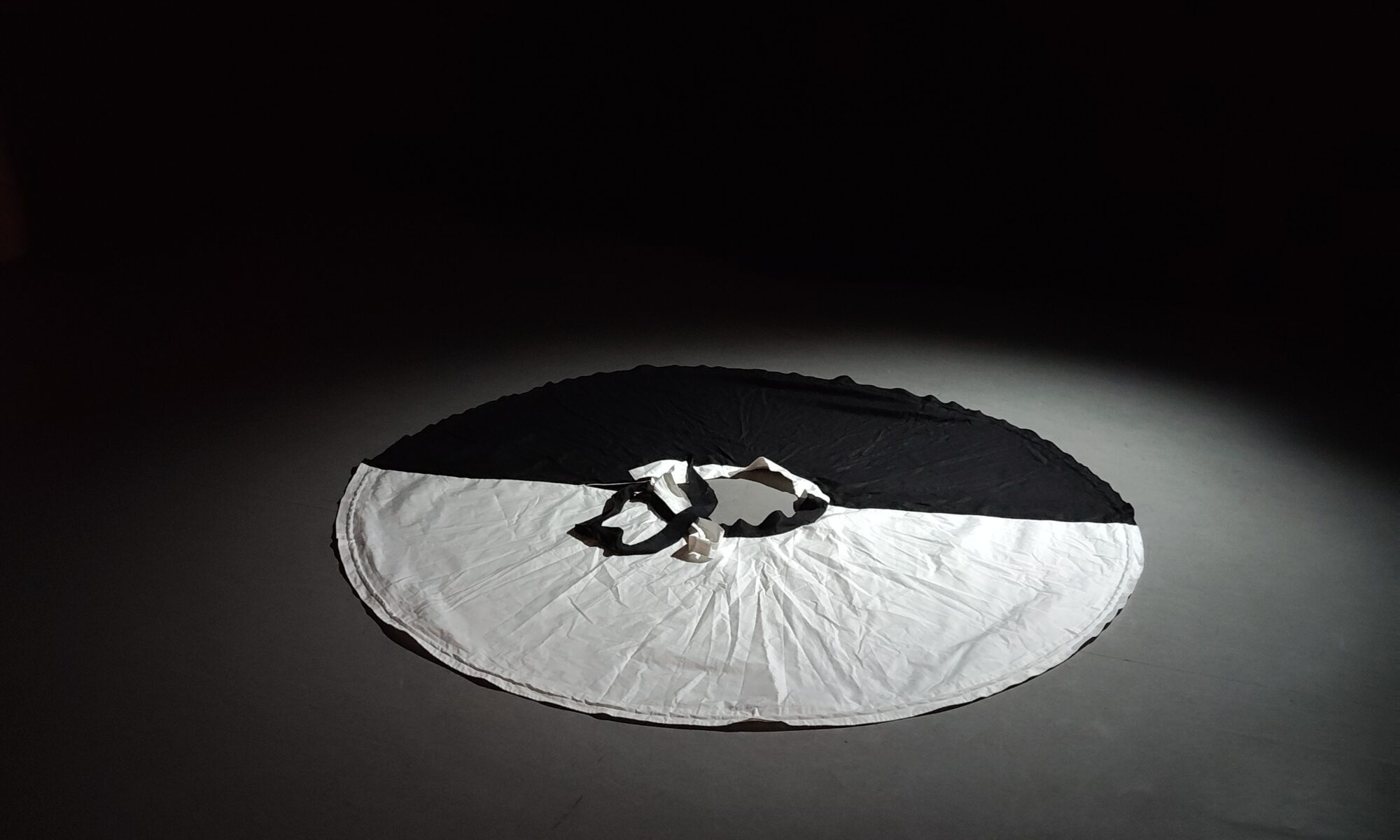
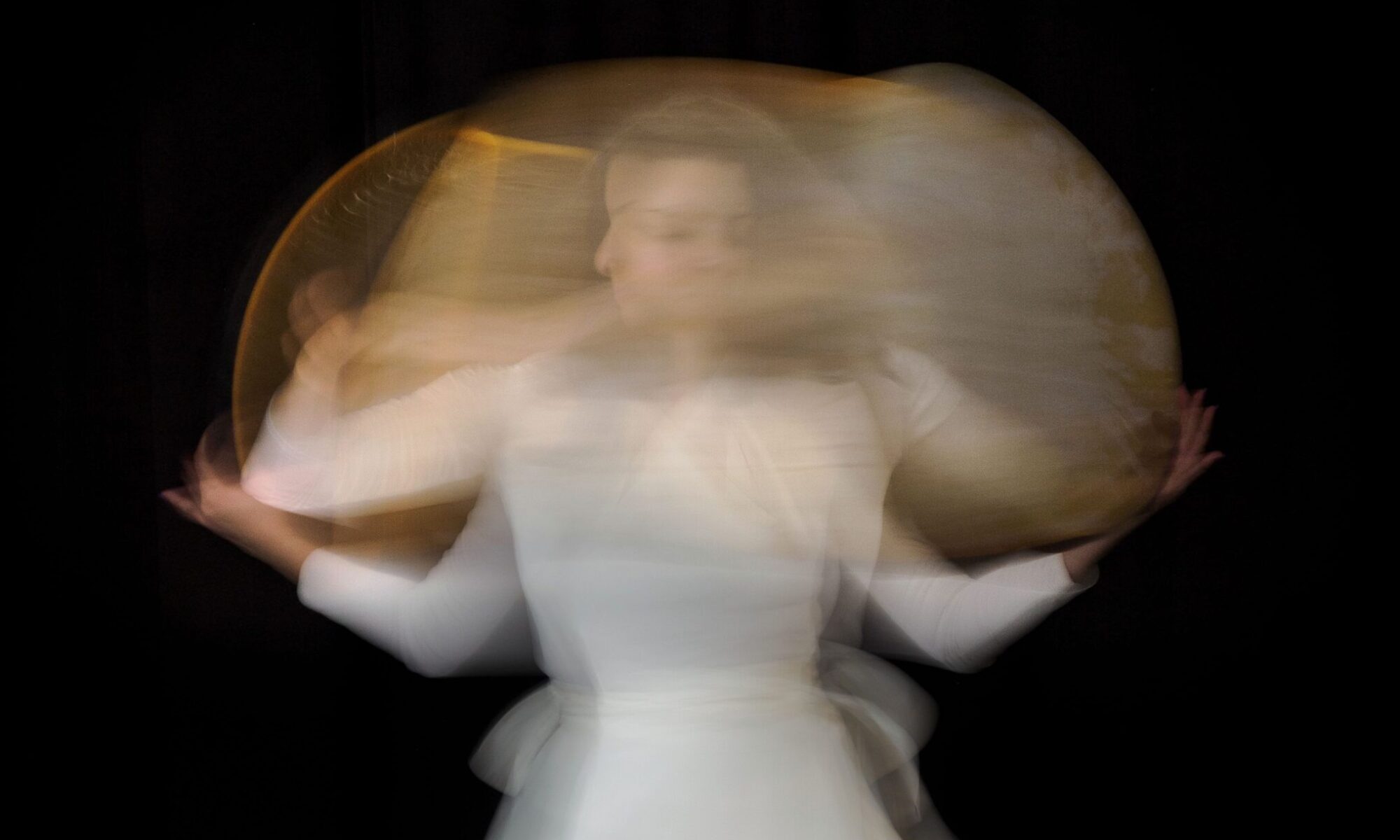
Two dancers, one skirt — half black, half white. Their bodies move as one, circling through shadow and light.
YIN YANG is more than a dance — it is a living poem, a meditation on duality. It explores the eternal balance where darkness gives birth to light, and light cannot exist without its shadow. Through movement, the dancers embody the timeless truth that opposites are not enemies, but reflections of one another — forever intertwined.
Inspired by Yin Yang philosophy and Sufi whirling, two women — Safa Solati and Alisa Gennadieva — performed this unique piece together for the first time in Finland, during the Portal of Duality art exhibition at Silver Brush Gallery, Helsinki. Their message is clear and deeply needed in today’s world: to stay grounded, seek balance, and embrace the darkness within so that we may bring light into a new earth.
With this performance, the artists invite the audience to reflect — to witness how art can bridge opposites, spark dialogue, and awaken inner harmony. Safa and Alisa plan to bring YIN YANG to various art exhibitions across Finland and beyond, continuing to share their message of unity and balance.
Their next performance will take place at the Opening Event for HIAA Fest 2025, on Wednesday, 26 November 2025, at Kaapelitehdas – Valssaamo Gallery, starting at 19:00.
If you wish to collaborate or book YIN YANG for an exhibition or event, please contact: 📩 info@whirlingarts.fi
After years of studying psychology and exploring various therapeutic modalities like dance and music therapy, I discovered a profound connection with whirling. This experience led me to integrate it into my practice, offering an alternative therapeutic approach for individuals seeking solutions beyond traditional methods.
Whirling dance is often seen as a form of spiritual expression, a way to transcend the self and connect with the divine. However, true spiritual elevation cannot occur without first addressing the layers of our psyche that hold us back. Our mental programming—the beliefs, thoughts, and emotional blockages—acts as an invisible barrier that keeps us from experiencing a deeper, more authentic connection with the spiritual realm.
To elevate ourselves spiritually, we must begin by diving into the depths of our psychological landscape. Whirling, as a movement-based practice, offers a unique opportunity to explore these layers. As we turn, we are not only spinning in physical space, but also rotating through the many dimensions of our inner selves. The circular motion mirrors the cyclical nature of our thoughts and emotions, giving us a space to confront, process, and release mental blockages.
This approach transforms whirling from a purely spiritual practice into a psychological journey of self-liberation. The dance becomes a tool for breaking free from the subconscious patterns that shape our reality. As we move through these layers—facing fears, letting go of limiting beliefs, and dissolving emotional tension—we create space within ourselves. Only when the mind is clear and the psyche is free can the heart truly open to the higher realms of spiritual consciousness.
Photos: Auvo Takkinen
By integrating psychology into the practice of whirling, we ground the experience in self-awareness, making the spiritual elevation that follows more sustainable and authentic. It is through this deep psychological work that we begin to understand ourselves fully, peeling back the layers of our mental conditioning. With each turn, we spiral closer to our true essence, shedding the illusions of the mind and allowing the spirit to soar.
In this way, whirling dance becomes a complete journey—starting from the inner layers of the psyche and culminating in the liberation of the spirit. By first working on ourselves mentally, we prepare the ground for spiritual elevation, creating a more balanced and harmonious connection between mind, body, and soul.
Whirling offers a unique opportunity for individuals to journey inward, as the blurred vision helps dissolve external distractions. As Rumi wisely said, ‘Go to your room and reflect.’ Whirling creates this sacred space, allowing each person to retreat into their own inner world—to connect with their thoughts, emotions, inner struggles, and whatever else needs to be acknowledged and embraced.
By integrating whirling into my therapeutic work, I was able to offer an alternative path for emotional healing, especially for those who may not find resolution through conventional talk therapy. This holistic approach taps into both psychological principles and somatic healing, creating a space for deep personal transformation and inner peace.
Whirling dance is an ancient practice that transcends the physical and delves deep into the mind and soul. For many who are unfamiliar with the practice, whirling presents a unique set of challenges—both psychological and physical—that manifest as “walls.” These walls, often invisible but palpable, can deter individuals from fully immersing themselves in the experience. In this article, we will explore how hitting these walls is not just a barrier, but an opportunity to break through and experience something profound.
The Psychological Wall: A Prelude to Whirling
Many individuals face a wall even before they begin their whirling dance journey. Often, the first resistance comes in the form of assumptions. People make assumptions about their abilities or how their bodies might react to the practice, based on preconceived beliefs. These assumptions are the brain’s defense mechanism, designed to keep us in our comfort zones. It’s a psychological wall, built on what we think we know about ourselves.
For example, someone might see an advertisement for a whirling dance class and immediately dismiss the idea, thinking, “This isn’t for me. I’ll get dizzy. I won’t be able to do it.” This reaction is an early sign of resistance—a wall of the mind that stops them from even trying. This wall is not unique to whirling; it’s a common human response to the unknown or unfamiliar. Our minds are hardwired to protect us from perceived discomfort, and in doing so, we often rob ourselves of the chance to experience something transformative.
Personal Experiences: The Migraine and Pregnancy Walls
In my years of teaching whirling dance, I’ve encountered numerous examples of individuals who faced their walls. One participant struggled with chronic migraines and used this condition as a reason not to attend class for over a year. This was their wall—a belief that the physical act of whirling would trigger their migraines. However, after finally deciding to try, they were astonished to find that not only did they not feel sick, but the experience didn’t worsen their headaches at all.
Similarly, another common wall for participants, particularly women, was pregnancy. Some women believed that pregnancy would make whirling dangerous or uncomfortable. Yet, I’ve witnessed pregnant participants not only enjoy the practice but also report feeling better during the whirling sessions than they did throughout their day-to-day activities. These examples show that our walls are often constructed out of fear or assumptions, rather than reality.
The Abstract Reality of Whirling: Confronting the Internal Wall
For those who overcome the initial resistance and begin their practice, another wall emerges—the experience of the dance itself. Whirling distorts one’s sense of normalcy. The act of spinning blurs vision, and the world as we know it seems to disappear. This shift is more than just a physical experience; it’s a profound psychological one. Suddenly, the external reality that we are so used to—the one where objects are sharp, defined, and recognizable—fades, and we enter an abstract reality.
This new reality can be unsettling. Our brain, which is accustomed to clear, familiar patterns, becomes uncomfortable when faced with the unknown. It wants to retreat, to stop, and to return to the safety of what it knows—walking, standing still, focusing. Whirling, however, defies these programmed responses. It challenges the brain to let go of control and enter a state of surrender.
For many, this is where another wall forms. The brain resists this new reality, and this resistance can manifest in fear or discomfort. But for those willing to push through, a new dimension of self-awareness opens up. The brain’s desire for comfort and routine is an obstacle, but breaking through this wall is where the magic of whirling lies.
Breaking the Walls: Embracing the Unfamiliar
As we grow into adulthood, our lives become increasingly programmed. We wake up at the same time, perform the same rituals, and follow a routine that keeps us within our comfort zones. Anything that deviates from this routine can feel unsettling. Our brain, in its desire for comfort, builds walls to protect us from the unfamiliar.
But growth, both physical and spiritual, happens when we challenge these walls. Whirling dance is a practice that forces the brain to confront its limitations. It’s a direct challenge to the comfort zones we’ve built around ourselves. The moment the world begins to blur, and the familiar disappears, is the moment we have the chance to break free from our programmed selves. This shift in perception, where the clear lines of everyday life fade, is an invitation to let go of control and embrace uncertainty.
In whirling, this blurred vision represents a deeper internal shift—the blurring of rigid patterns and identities we cling to. As our visual world fades, so too does the need to categorize, control, and understand everything around us. We are invited to surrender to the flow of the moment, to trust our bodies and instincts in ways that daily life doesn’t often demand of us.
It’s in this moment of uncertainty that transformation happens. The brain, no longer able to rely on its habitual markers of safety and clarity, is forced to adapt, to find new ways of being. This is where true growth occurs—when we allow the familiar to fall away and step into the unknown with openness and curiosity.
In many ways, the blur symbolizes life’s transitions: when the old certainties no longer hold, and yet the new has not fully emerged. Just as in whirling, this in-between state can be unsettling, but it’s also where the deepest breakthroughs can happen. To hit the wall and keep spinning, to stay with the discomfort of the unfamiliar, is to trust that beyond the blur lies a more authentic version of ourselves, waiting to emerge.
Embracing the Unfamiliar, Even When It’s Joyful
At times, the unfamiliar that we avoid is not just discomfort or unpleasant sensations, but even the experience of joy, freedom, and liberation. It may sound counterintuitive, but when life’s challenges persist for too long, we can become so accustomed to struggle that even positive emotions—like laughter, lightness, and the sensation of flying—can feel foreign. When we’ve been conditioned to endure stress, worry, or hardship, the idea of letting go and experiencing pure joy can be daunting.
This avoidance of pleasure is another wall we unknowingly build around ourselves. We begin to associate comfort with the familiar burdens we carry, and in doing so, we distance ourselves from moments of happiness. Whirling, with its sense of freedom and release, invites us to reconnect with those feelings of elation, but for some, this can feel as disorienting as facing pain. Allowing ourselves to embrace joy is a courageous act, especially when it feels unfamiliar. It’s an act of reclaiming the lightness that life, and practices like whirling, offer us. In breaking through this wall, we allow joy to become not just a fleeting moment, but a welcomed and integrated part of our experience.
Photos : Auvo Takkinen
Conclusion: Hitting the Wall to Break Through
Hitting a wall in whirling dance practice is inevitable. Whether it’s a psychological wall built on assumptions and fears, or the physical discomfort of stepping into an abstract reality, these walls are part of the journey. But the true beauty of whirling lies in the act of breaking through these barriers.
As we move past these walls, we gain a deeper understanding of ourselves. We learn that the brain’s resistance is simply a defense mechanism—a way to keep us safe, but also a way to keep us limited. By pushing through, by spinning through the discomfort and confusion, we step into a higher level of awareness. In this space, we find freedom.
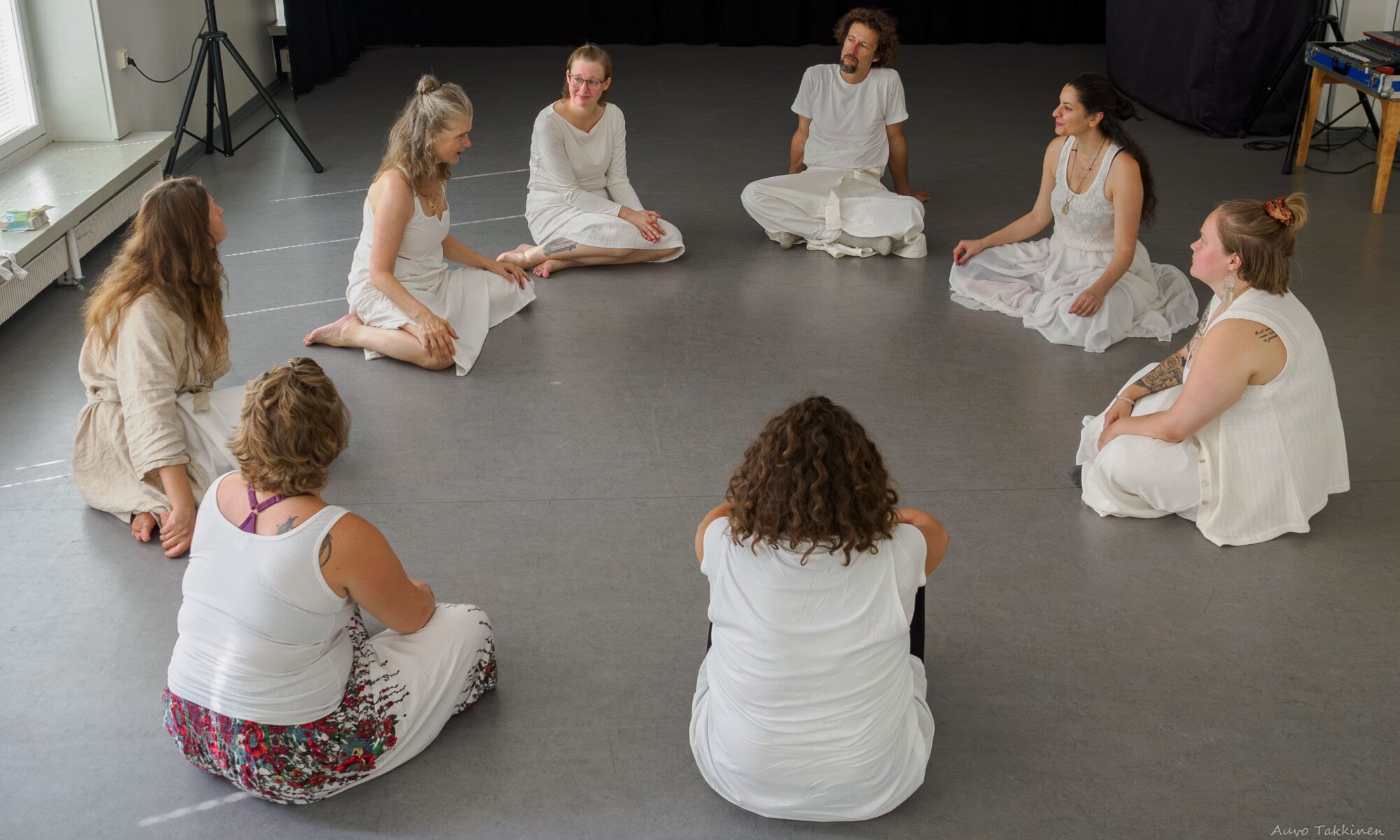
The Autumn weekly whirling dance sessions, which began on September 10, 2024, with an open trial session, are coming to a close on December 3, 2024. This mystical and magical journey has spanned nearly three months, and now, as we approach the end, it is a moment to reflect on the unique experience these sessions have offered.
Each gathering over the past weeks was distinct, with every group bringing its own energy to the practice. Some participants joined us for multiple sessions, showing steady commitment, while others attended just one or two. Regardless of frequency, all participants contributed to the rich and varied atmosphere of the sessions. The presence of children, participating alongside their parents, added a special dynamic, infusing the sessions with a joyful and playful energy.
Observing the participants’ progress throughout this period has been a rewarding experience, offering insights into the deeper impact of regular whirling dance practice. For many, it became an opportunity for growth, both physically and spiritually, as they immersed themselves in the practice.
We are deeply grateful to the Oskar Oflunds Foundation for their generous financial support, which made these sessions possible. Their contribution allowed us to offer this enriching experience to a broad and diverse group, creating a memorable and transformative journey for all involved.
As we approach the final session, we carry forward the lasting effects of this shared experience, looking ahead to future opportunities to continue this magical practice.